
Boosh the Beekeeper Honey & Molasses
From Egyptian clover fields, slow and natural.
Slow-harvested honey and molasses.
Boosh the Beekeeper works one corner of the Egyptian countryside, where clover fields support small-batch, slow-harvested honey. One producer, one range, all from the same hives.

SINGLE ORIGIN
ALWAYS NAMED
DIRECTLY SOURCED FROM EGYPT
100% NATURAL
NO ADDITIVES
INDEPENDENTLY LAB-TESTED
The range
Boosh the Beekeeper
Honey & Molasses
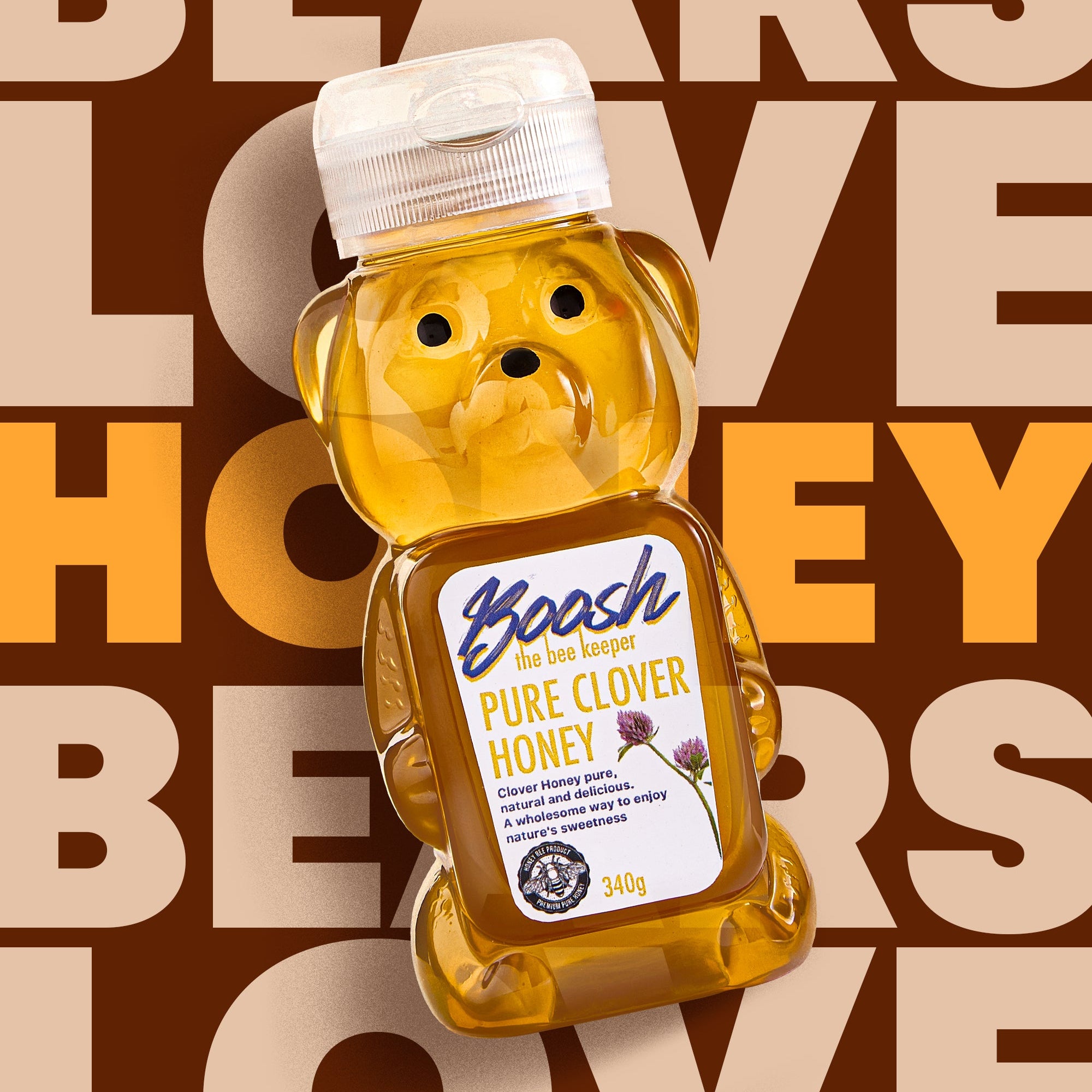
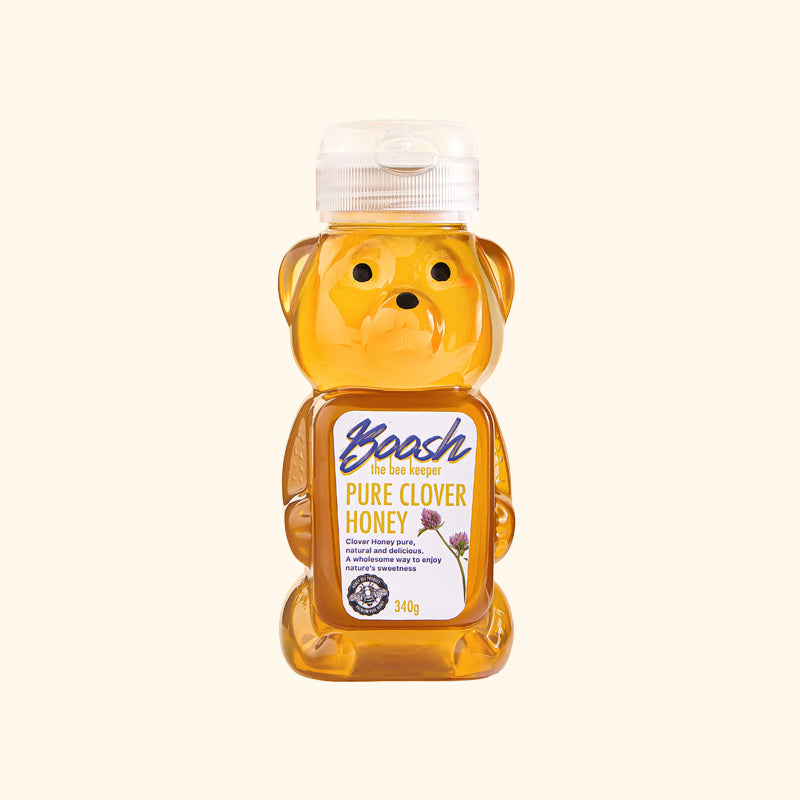
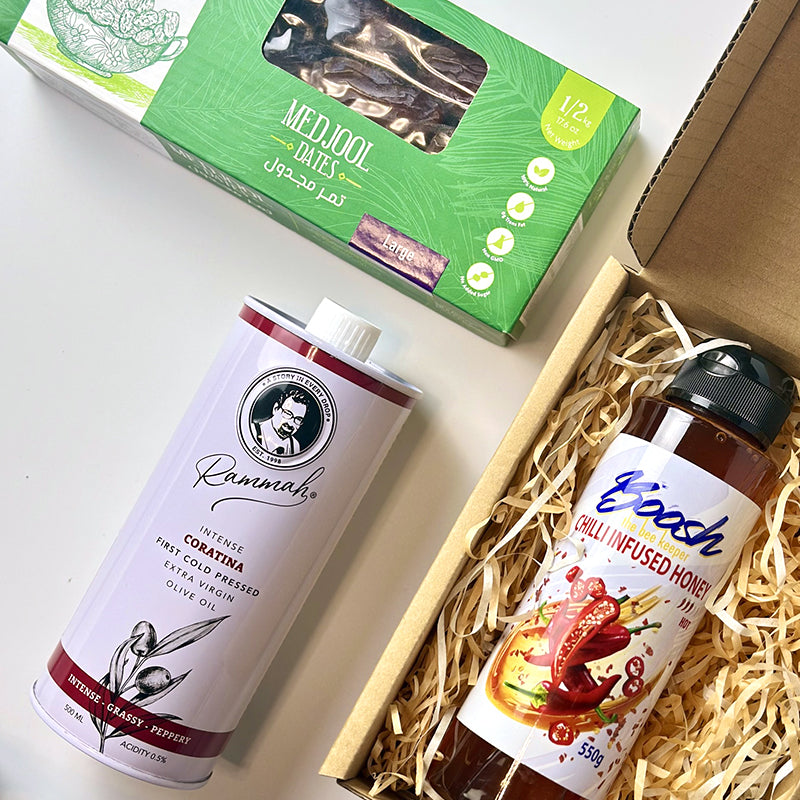
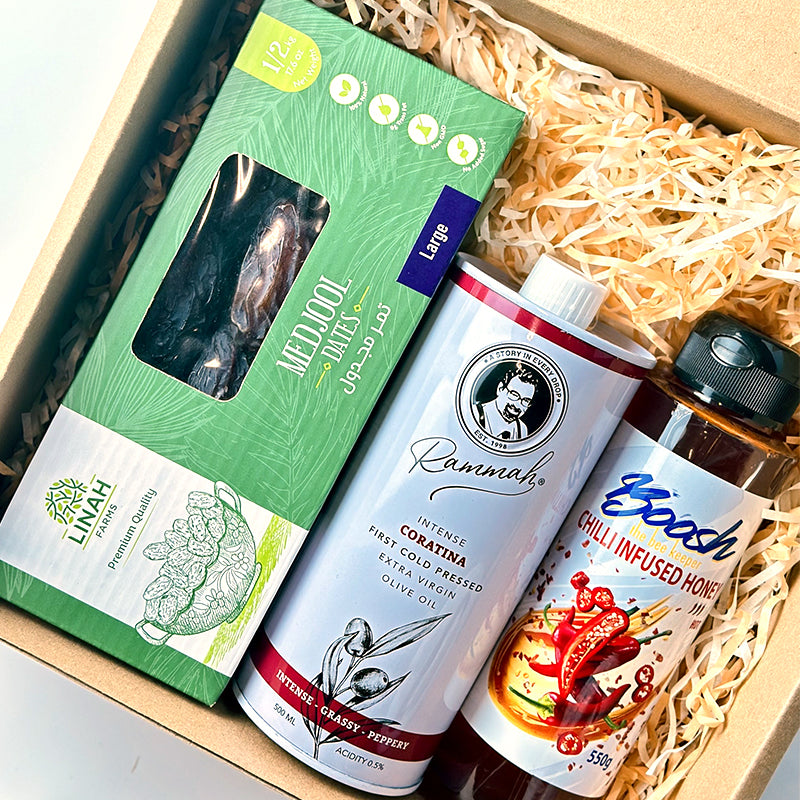


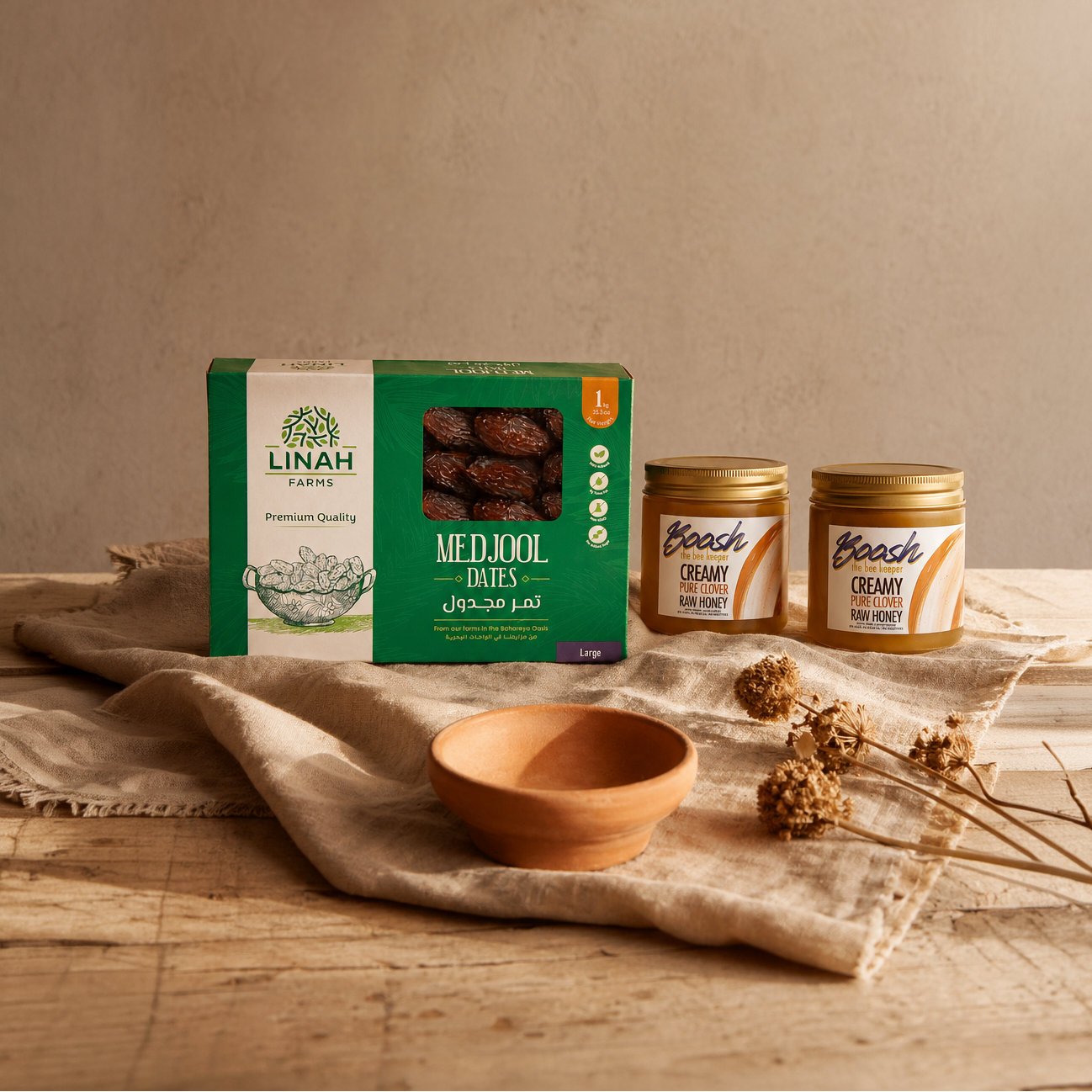
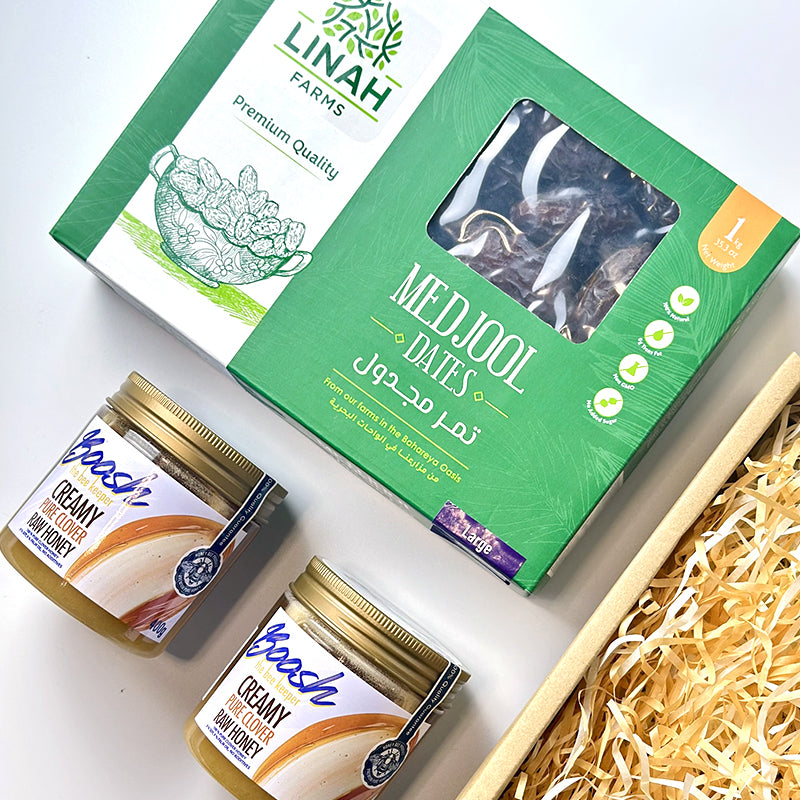
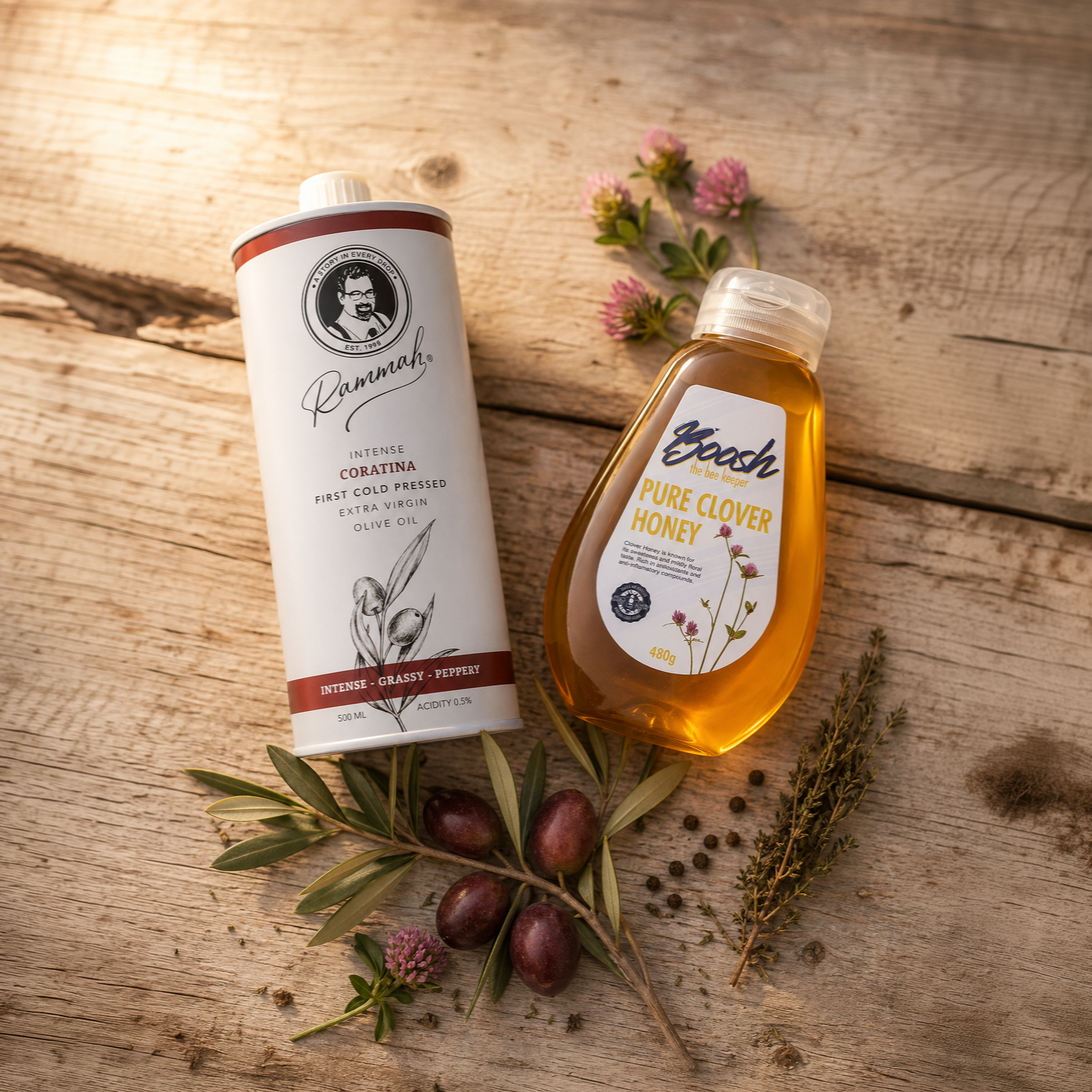
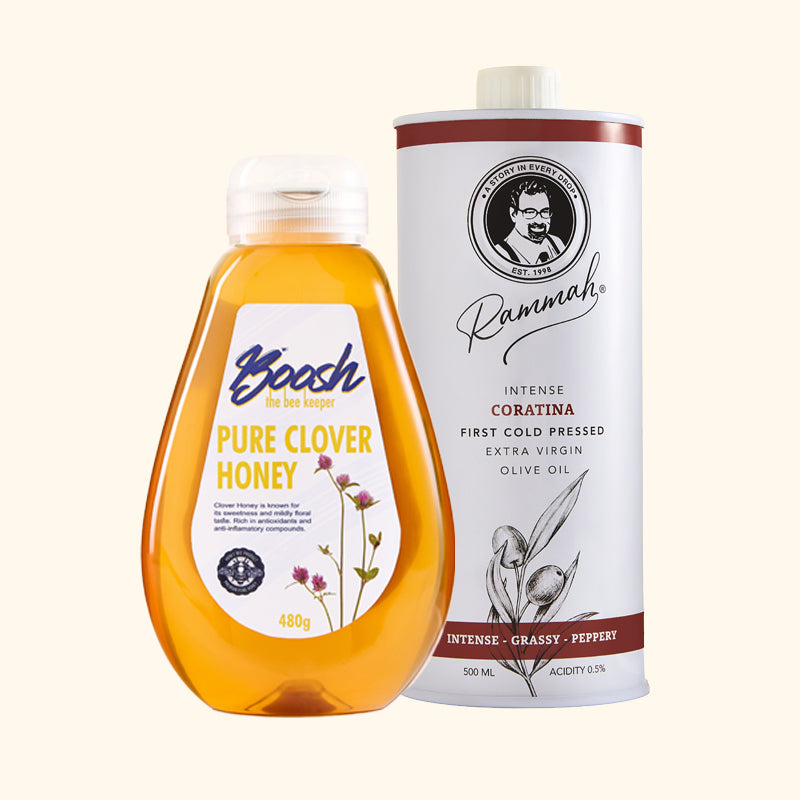
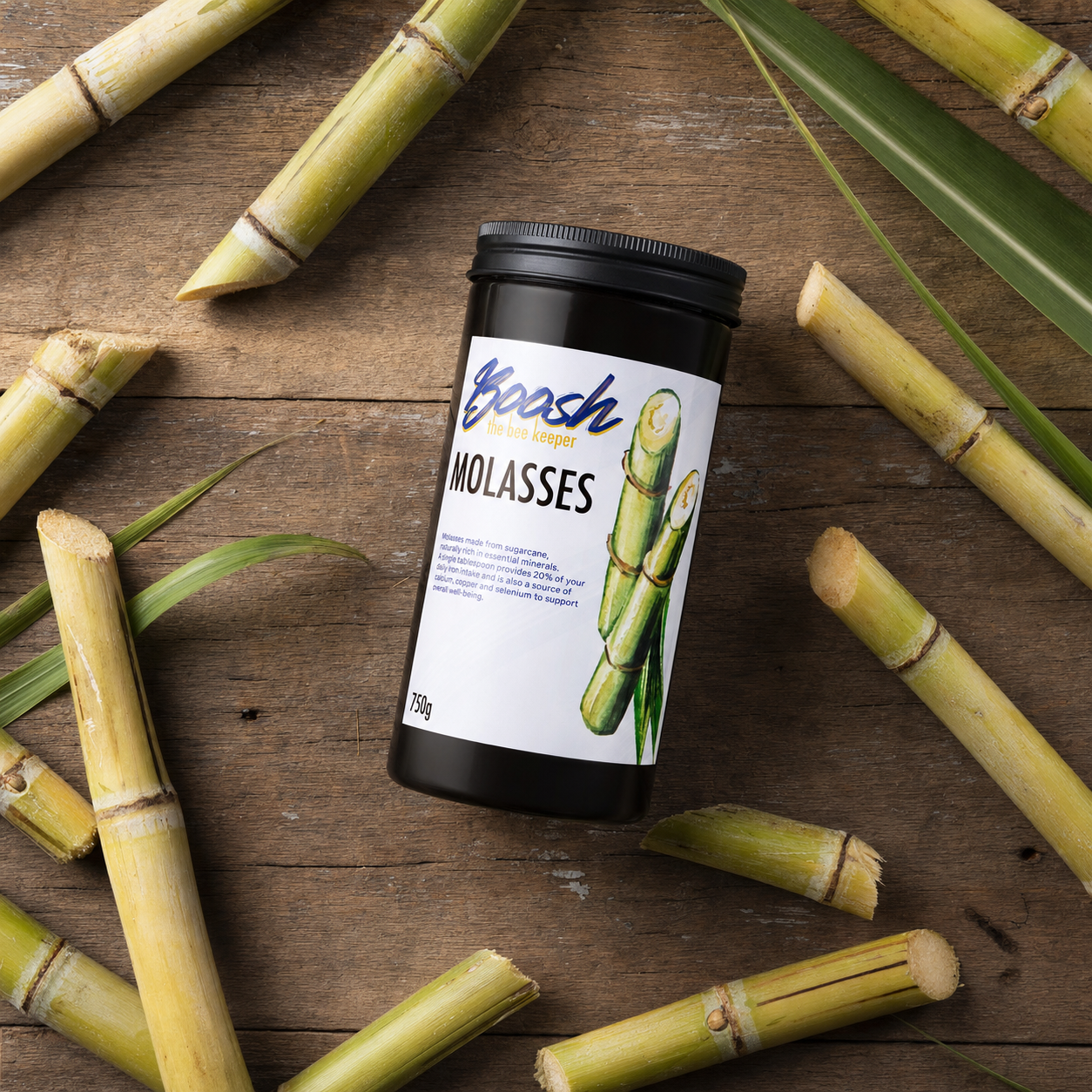
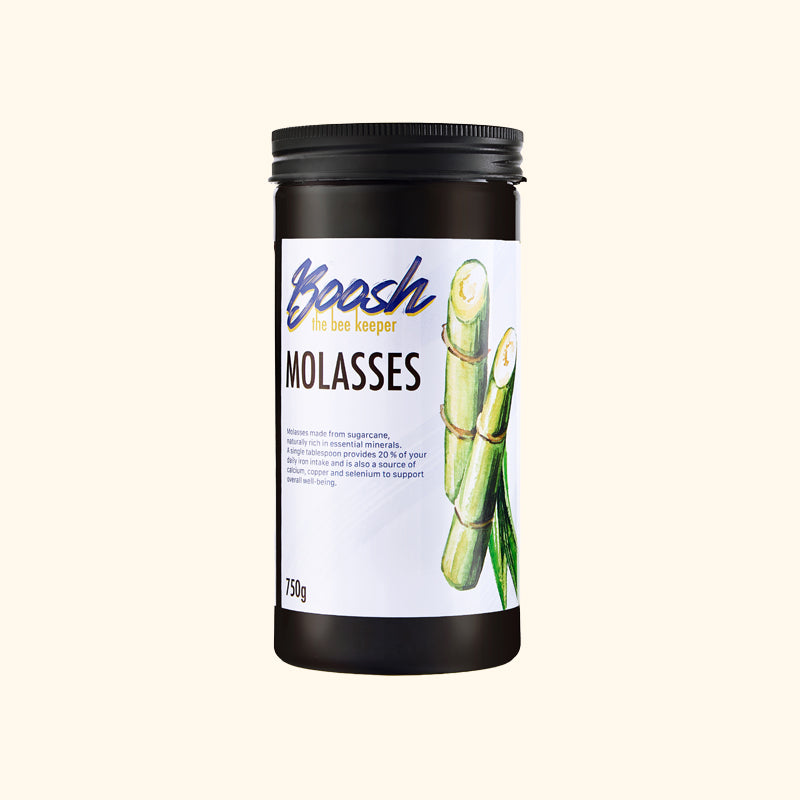
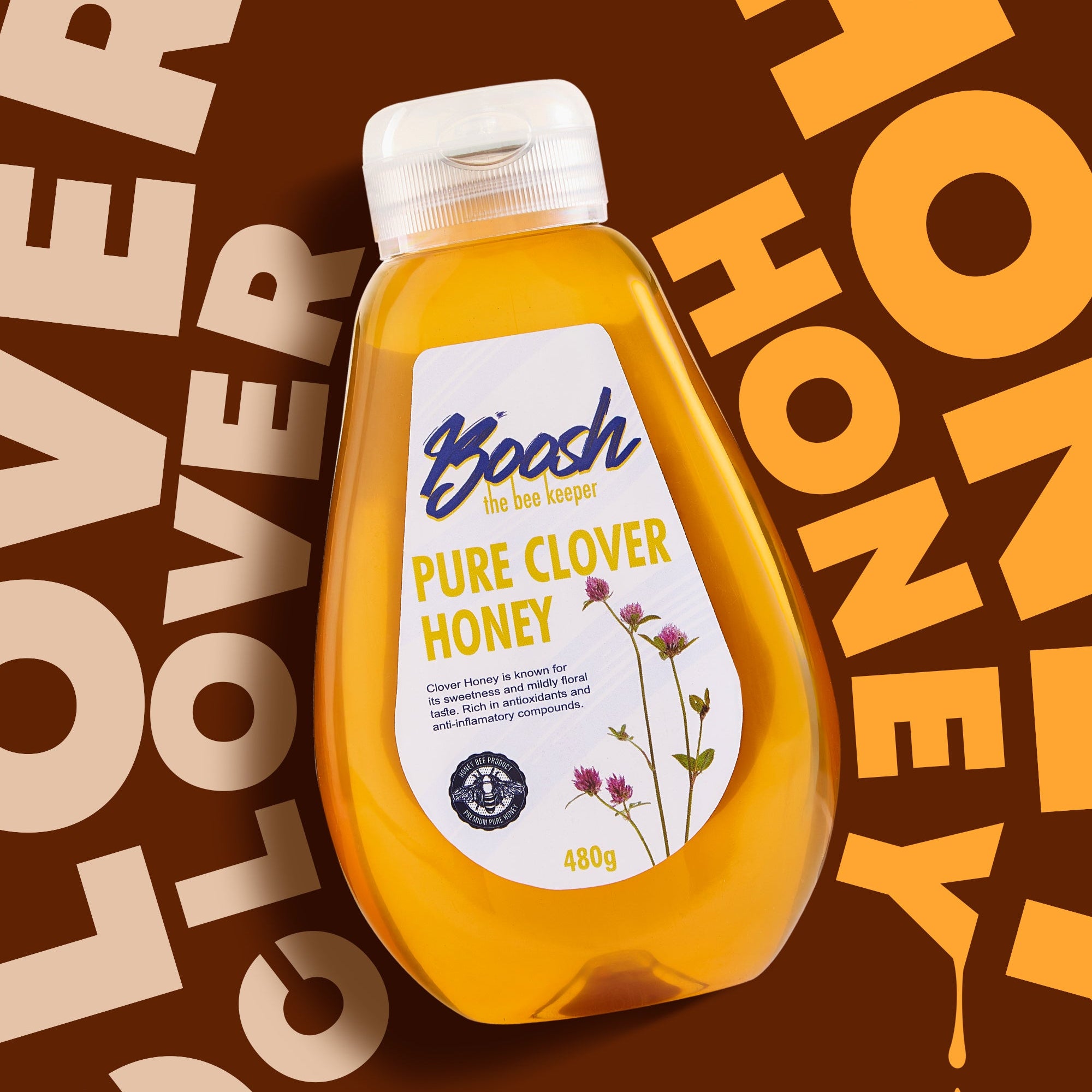
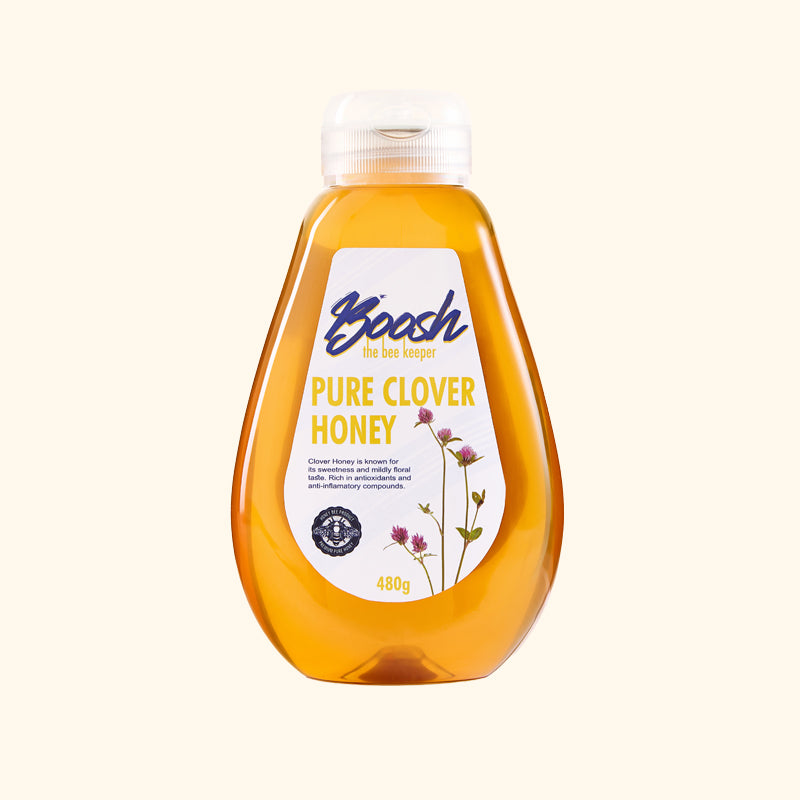

NOTHING ADDED
NOTHING TAKEN AWAY
ONE PRODUCER, ONE PROMISE
NEVER RUSHED
INDEPENDENTLY LAB-TESTED
TRACEABLE TO SOURCE
Inside the producer
One beekeeper,
one countryside.
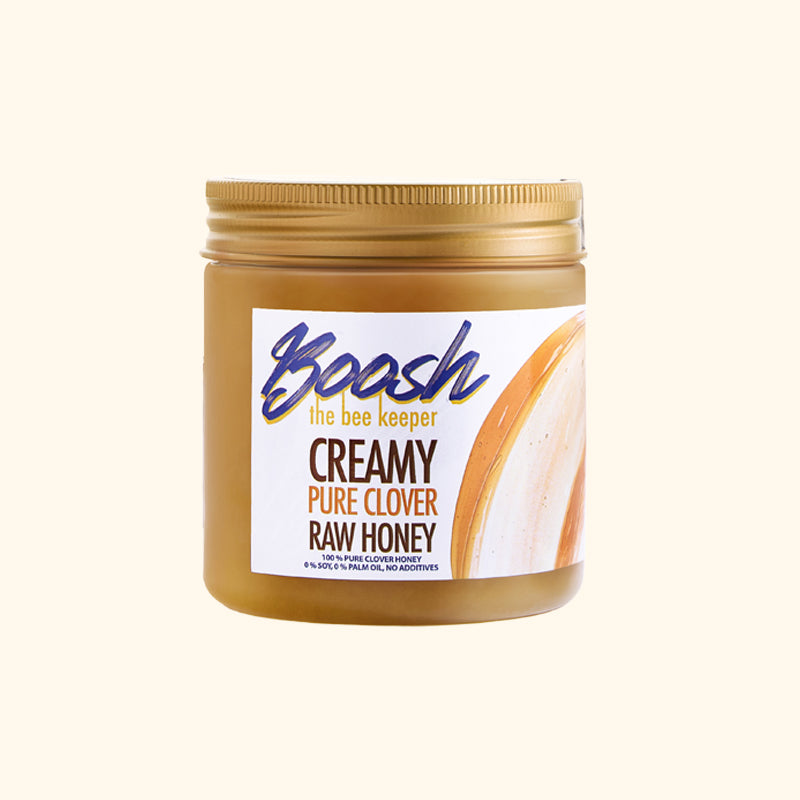
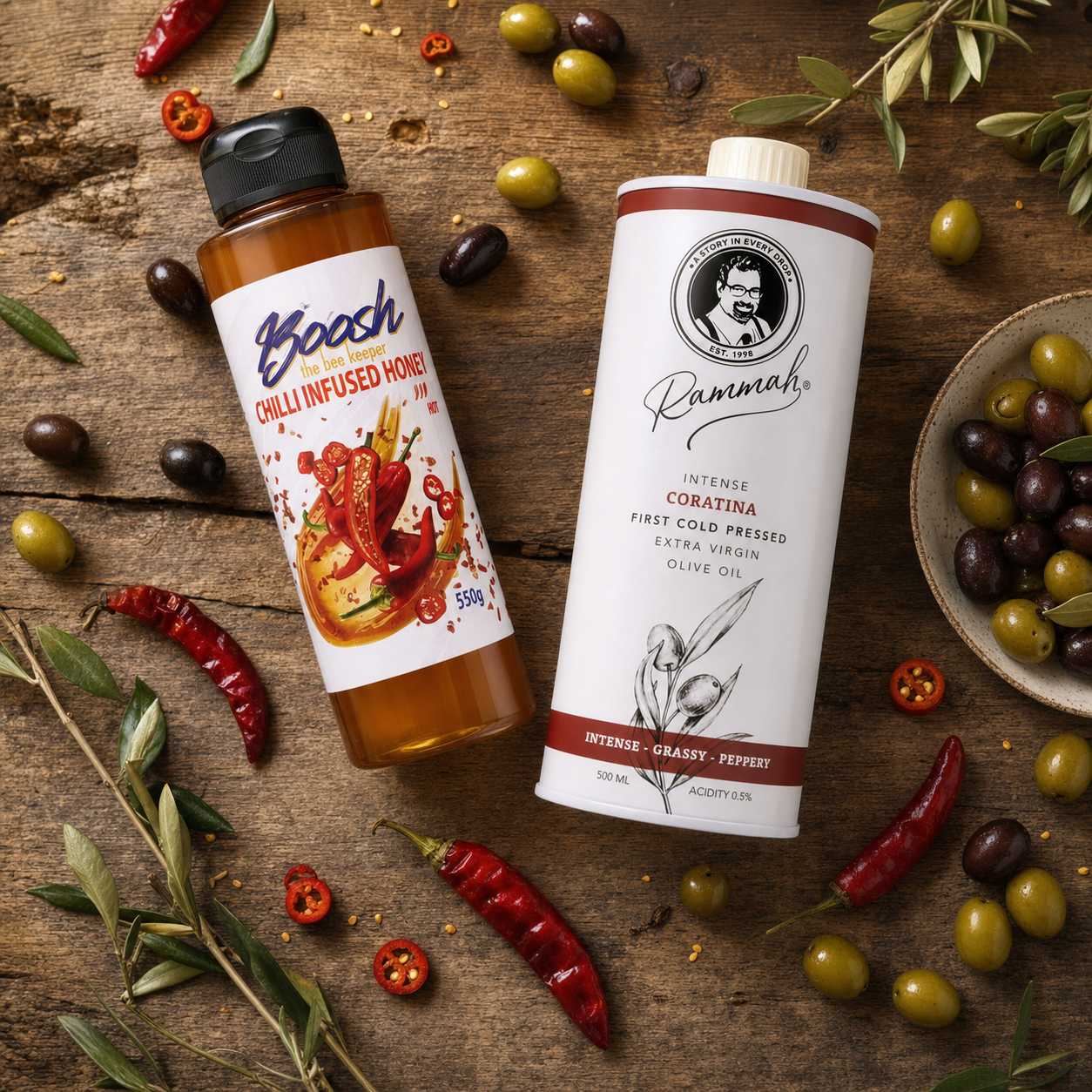
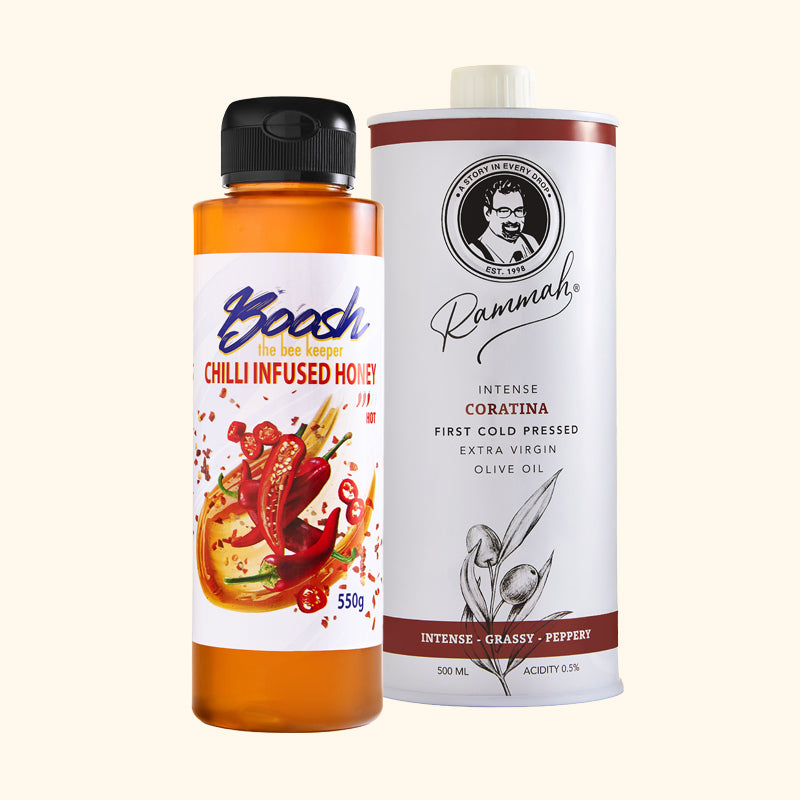
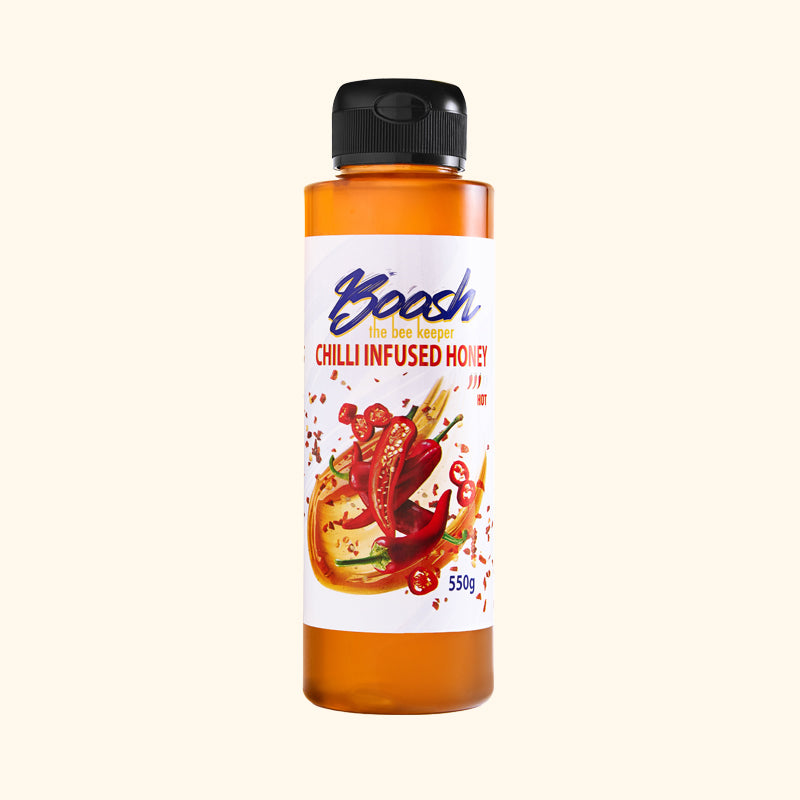
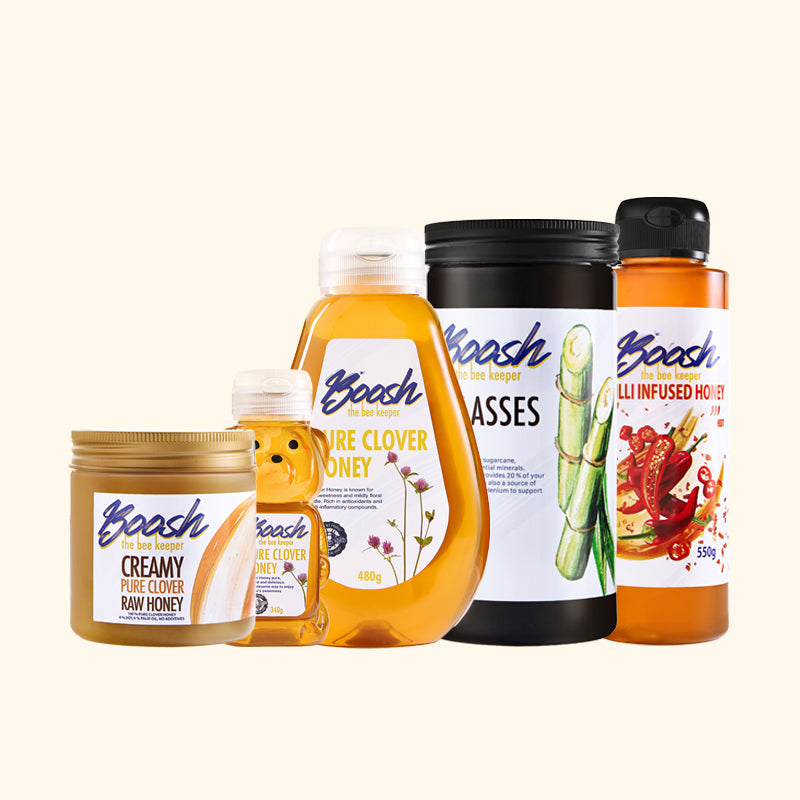
Boosh the Beekeeper makes a honey from the same hives: three clover honeys — pure, raw, and chilli-infused — and an unsulphured sugarcane molasses. Nothing blended, nothing rushed.
Boosh's bees forage clover across the Egyptian countryside, and the honey is bottled close to the hives rather than blended or over-processed. One beekeeper, one corner of the country, one set of hives behind the whole range.
Pure honey with nothing added, no syrups, no thinning, no shortcuts. The raw clover honey is left close to its natural state and whipped creamy and spreadable; the chilli honey is slowly infused with capsicum for a heat behind the sweetness. The molasses is pressed from fully ripened sugarcane, unsulphured — nothing added, nothing removed.
Every batch of our molasses goes to QCAP, an ISO/IEC 17025-accredited laboratory under Egypt's Ministry of Agriculture for two independent tests. We screen for pesticide residues using the EN 15662 method (LC-MS/MS and GC-MS/MS), and we test for heavy metals, lead, cadmium, and mercury, by ICP-MS, the gold standard for trace-element analysis.
All 100% natural, no additives and ISO/IEC 17025 laboratory tested.
“One beekeeper, one countryside, one honest range.”

Why Egyptian honey
Four thousand
years of
keeping bees.
This isn't a country that recently discovered honey — it's one of the places that taught the world to harvest it.
Egypt has kept bees for more than five thousand years. Hives shaped from moulded Nile mud appear in the archaeological record from before 2422 BCE, and honey was prized enough to be written into ancient medical papyri as a remedy for wounds. Egyptian beekeepers still move their hives with the flowering seasons, and Egypt remains one of the few countries with a formal legal codex governing how honey is produced and sold.
years of continuous beekeeping along the Nile — a tradition refined and passed down like an heirloom.
Hives moulded from Nile mud appear in the archaeological record.
Honey written in by ancient physicians as a remedy for wounds.
One of the few countries that formally governs how honey is produced and sold.
The honey
What is
clover honey.
Clover honey is made by bees foraging on berseem clover — Egyptian clover — a flowering legume that has carpeted the Nile valley for thousands of years. The result is mild, smooth, and gently sweet, with a soft, earthy finish rather than a sharp one.
As easy on morning toast as it is stirred into tea or drizzled over labneh.

Origin — Minya, Middle Egypt
From the fields
of Minya.

Boosh the Beekeeper slow-harvests clover honey in Minya, a farming heartland on the banks of the Nile, roughly 245 km south of Cairo, with hundreds of thousands of acres under cultivation. The clover-fed hives sit among the very fields that have fed the region for generations.
Choosing Minya honey means something beyond flavour. Beekeeping here supports rural farming families, turning small apiaries into a meaningful source of income for smallholder communities. Every jar is a connection to the land, the season, and the people who tend the hives.
south of Cairo, on the banks of the Nile
of acres under cultivation around the hives
“One beekeeper, one countryside,one honest range.”
100% NATURAL
NO ADDITIVES
SINGLE ORIGIN
ALWAYS NAMED
INDEPENDENTLY LAB-TESTED
TRACEABLE TO SOURCE
Continue your visit


