
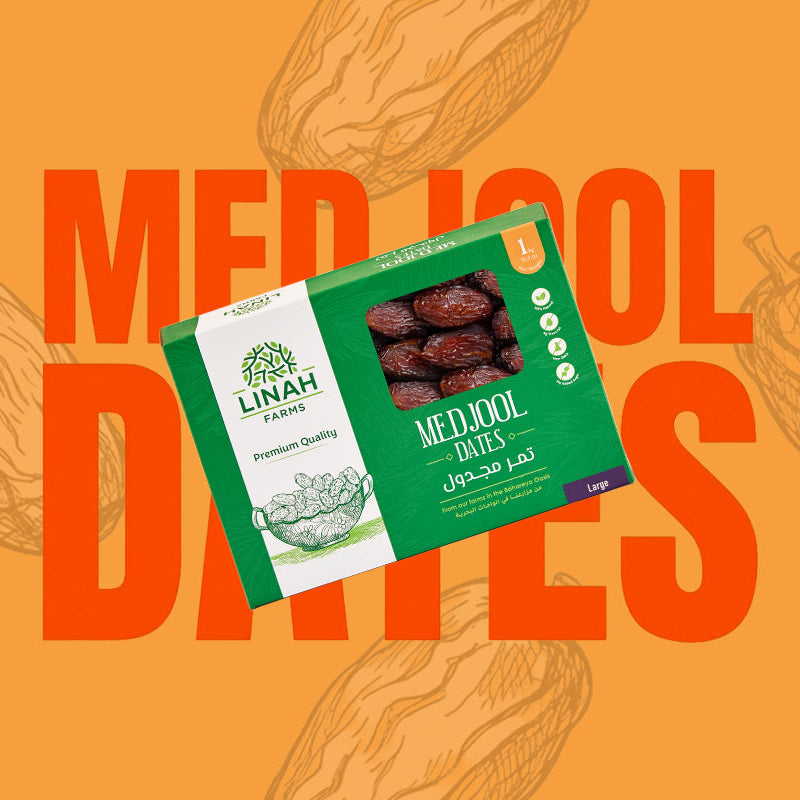
Linah Farms Medjool Dates
Slow-ripened in the oasis, sweet by nature.
Handpicked Medjool. Nothing added, ever.
Linah Farms grows Medjool dates in the Bahareya Oasis, deep in Egypt's Western Desert. The dates come down only when they're ready, slow-ripened on the palm, handpicked by the family that grows them.

SINGLE ORIGIN
ALWAYS NAMED
DIRECTLY SOURCED FROM EGYPT
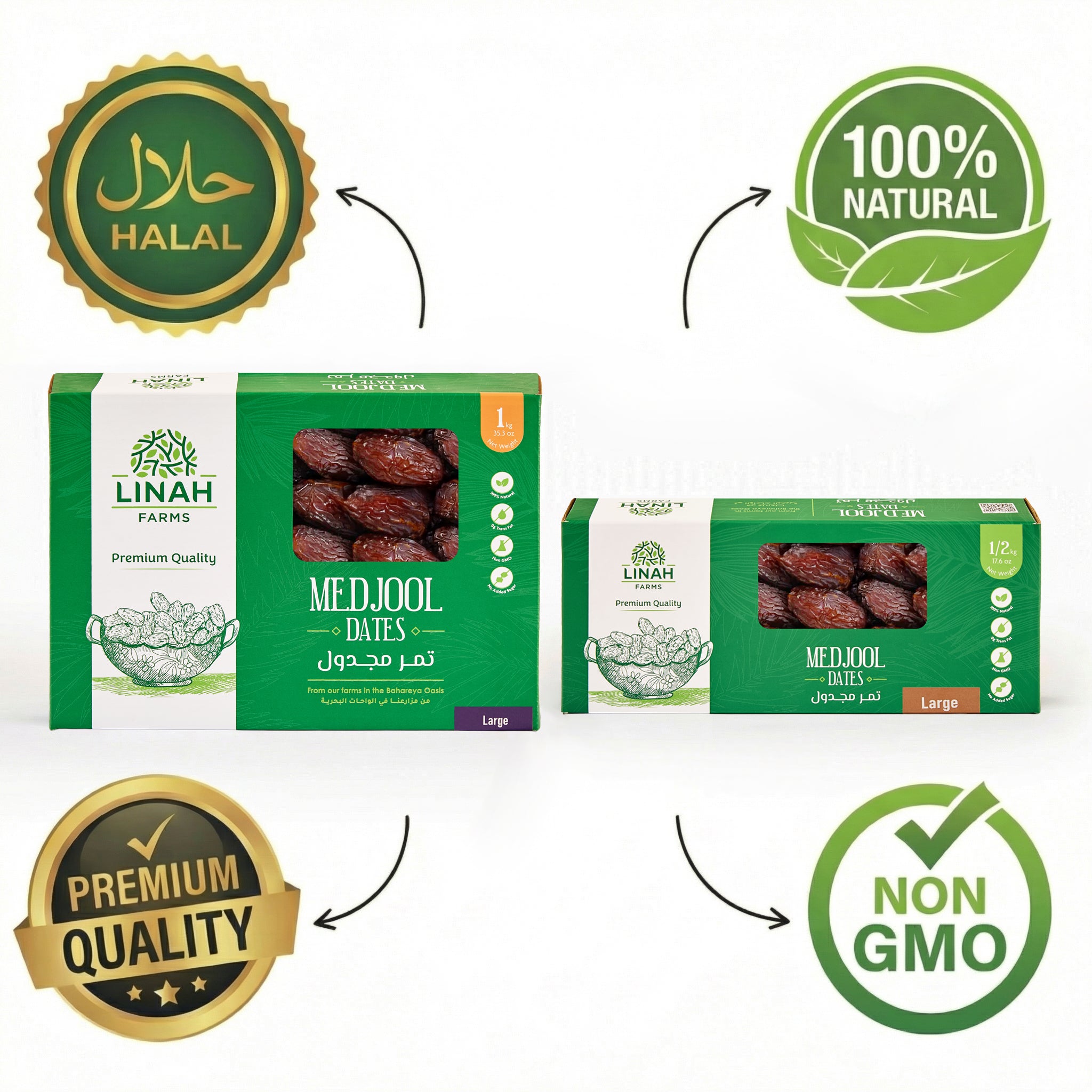
100% NATURAL
NO ADDITIVES
INDEPENDENTLY LAB-TESTED
The range
Linah Farms
Medjool Dates
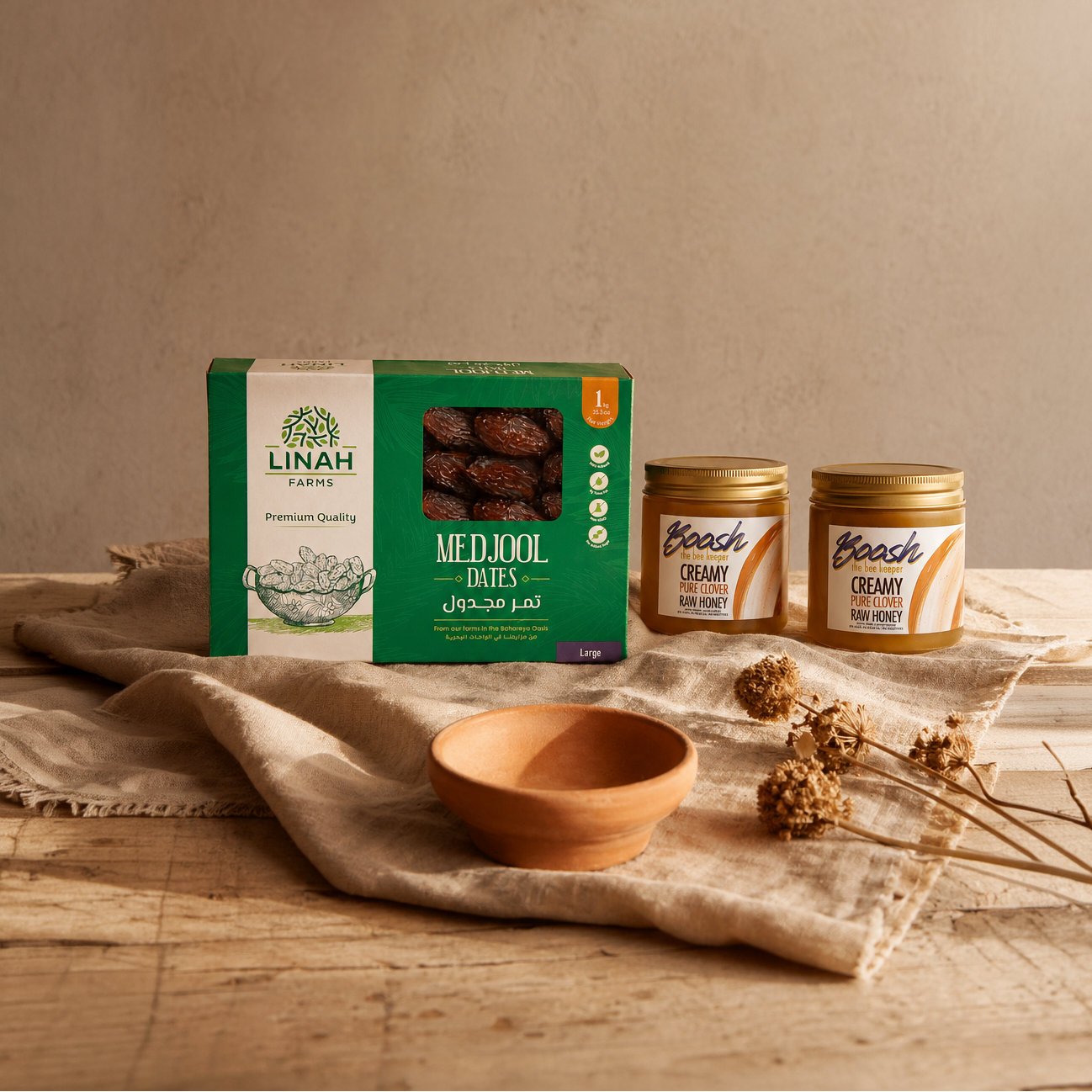
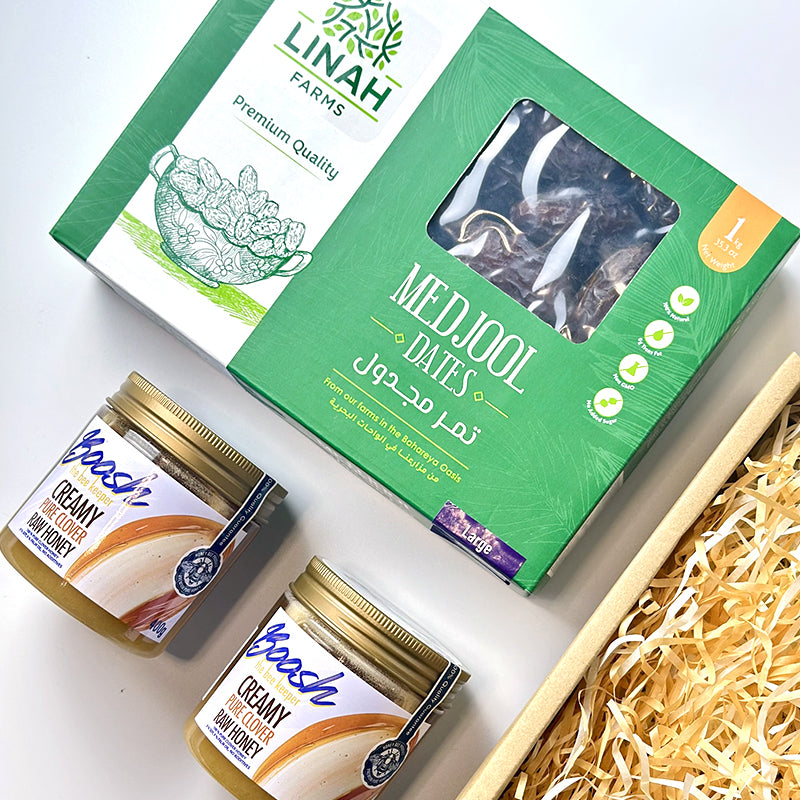
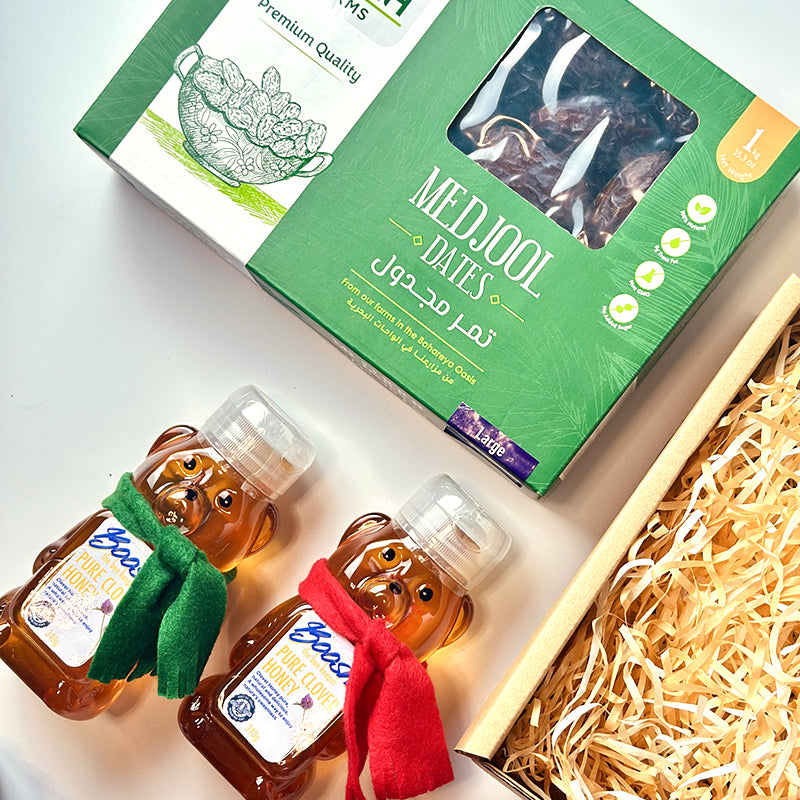
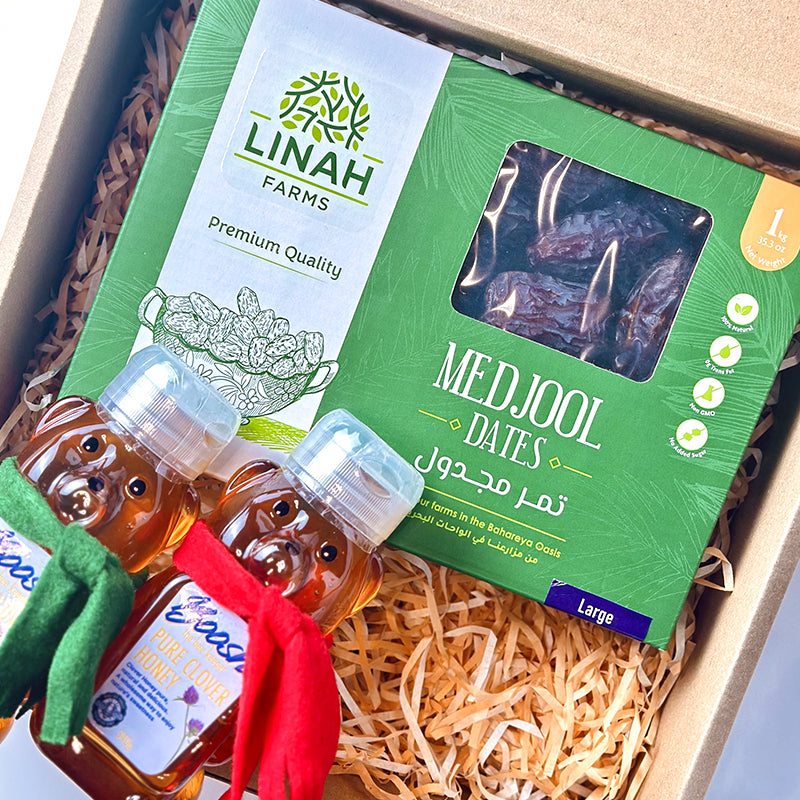
NOTHING ADDED
NOTHING TAKEN AWAY
ONE PRODUCER, ONE PROMISE
NEVER RUSHED
INDEPENDENTLY LAB-TESTED
TRACEABLE TO SOURCE
Inside the producer
One oasis.
One harvest.
Linah Farms is a grower in the Bahareya Oasis, making one thing: Medjool dates, in boxes from 500g to 1kg and in multi-packs up to twelve. The same care goes into every one.
Bahareya sits in Egypt's Western Desert, where wide day-to-night temperature swings and mineral-rich, spring-fed soil concentrate the fruit's sugars naturally. Linah's palms are tended across the whole season rather than rushed, so each date ripens fully on the tree.
Handpicked, not machine-stripped. Every box is the same fruit the family eats themselves, graded by size, never chemically treated or coated, then moved quickly from grove to box. The caramel sweetness comes from the date alone, not from added syrup or glucose.
Our Medjool dates are independently tested by laboratories accredited to ISO/IEC 17025. Across multiple samples from each lot, we screen for pesticide residues using the EN 15662 multi-residue method, test for heavy metals by atomic absorption spectrometry, and check for foodborne pathogens and aflatoxins.
The results: no pesticide residues detected. No Lead, cadmium and mercury detected. No Salmonella, Listeria, E. coli, or aflatoxins detected.
Medjools that are plump and yielding, with a deep caramel sweetness that comes entirely from the fruit. No added sugar. No shortcuts.
“Slow-ripened, handpicked, never hurried.”

Why Egyptian Medjool
These dates
are worth
knowing.
Some say Medjool takes its name from an Arabic word for unknown, but the Egyptians knew this place well enough to name it thousands of years ago, and have grown food here ever since.
Egypt grows more dates than any country on earth, that expertise has been handed down for generations. Bahareya Oasis gives the fruit its character: the long desert sun, the dry air, the spring-fed palms, the slow ripening that builds caramel depth without a single additive. But growing conditions only get you halfway. The rest is in the handling — how late the fruit is left on the palm, how it's picked, how quickly it moves from grove to box.
tonnes a year harvested, the largest harvest on earth
The fruit a family in the oasis would actually eat.
Picked when the sweetness is fully set, then moved quickly from grove to box.
No blending, no commodity grade, no long anonymous supply chain.
Medjool Dates
What is a
Medjool date?
Most dates are small, firm, and dry, the kind that come pressed into a block. A Medjool is the opposite. It's large, soft, and heavy in the hand, with a flesh that gives like caramel and a sweetness that tastes baked rather than added. Deep mahogany skin, a dense honeyed middle, a quiet note of dark toffee on the finish.
The one people mean when they call dates a treat rather than a pantry staple.

Bahareya Oasis
A special
place.

Bahareya Oasis sits about 370 kilometres southwest of Cairo, in Egypt's Western Desert — a green depression in an otherwise rainless landscape, ringed by dunes and dark volcanic hills. An oasis is simply a place where water reaches the surface in a desert. At Bahareya, that water comes from deep underground springs, drawn up to feed palm groves that have been the backbone of the local economy for generations.
For a date palm, this is close to ideal ground. The days are long and hot, the air is dry, the nights cool sharply, and rain almost never interrupts the ripening. Fierce sun, low humidity, clean spring water at the root — it lets the fruit hang on the palm and concentrate its sweetness slowly, without spoiling. A desert date is an oasis crop, not a riverside one; the dryness is not a hardship here, it's the whole reason the fruit is good.
southwest of Cairo, in Egypt’s Western Desert
palm groves drawn from deep underground springs, not a river
“One named grower, one oasis, one variety, left to take its time.”
100% NATURAL
NO ADDITIVES
SINGLE ORIGIN
ALWAYS NAMED
INDEPENDENTLY LAB-TESTED
TRACEABLE TO SOURCE
Continue your visit


